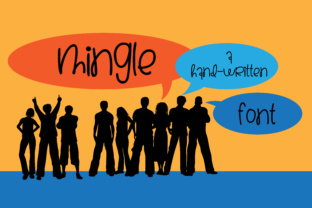
Mingle: A Casual Handwritten Font for Creative Expression
When it comes to typography, the right font can make all the difference in how a message is received. Mingle is a casual handwritten font designed to bring a sense of lightness and warmth to any project. Its legible and cute style makes it ideal for a wide range of applications, from personal notes to professional designs. Whether you're a creator, business owner, or just someone looking for a more approachable typeface, Mingle offers a unique blend of functionality and charm.
What Makes Mingle Unique?
Mingle stands out due to its natural, hand-drawn aesthetic. Unlike rigid, geometric fonts, Mingle mimics the imperfections of human handwriting, giving it a friendly and relatable feel. This characteristic makes it particularly effective for projects that aim to convey a sense of authenticity or intimacy. The font’s design balances readability with visual interest, ensuring that it remains easy to read even at smaller sizes.
One of the key features of Mingle is its versatility. It works well in both digital and print formats, making it suitable for everything from social media posts to packaging designs. Its clean lines and consistent spacing also contribute to its legibility, which is essential for maintaining clarity in any context.
Who Can Benefit from Using Mingle?
Mingle is not limited to a specific audience; it appeals to a broad range of users. For creators, such as illustrators, designers, and content producers, Mingle can add a personal touch to their work. Its casual nature makes it perfect for branding that aims to be approachable and relatable. Business owners who want to create a more humanized brand identity may find Mingle useful for logos, marketing materials, or website headers.
For general consumers, Mingle can enhance personal projects like greeting cards, DIY crafts, or even journaling. Its cute and friendly appearance makes it an excellent choice for anything that requires a warm, inviting tone. Additionally, educators or presenters might use Mingle to create visually engaging slides or handouts that feel less formal and more accessible.
Where Can You Use Mingle?
The applications of Mingle are nearly limitless. In the realm of digital design, it can be used for web banners, app interfaces, or social media graphics. Its casual style pairs well with modern, minimalist layouts, adding a touch of personality without overwhelming the design. For print media, Mingle is ideal for brochures, flyers, and posters that aim to capture attention with a friendly vibe.
In the world of branding, Mingle can be a valuable asset for businesses that want to stand out. From small startups to established companies, the font can help differentiate a brand by offering a fresh, unconventional look. It’s especially useful for industries that prioritize creativity, such as fashion, food, or wellness, where a relaxed and approachable image is often desired.
Strengths and Considerations
Mingle’s greatest strength lies in its ability to convey emotion through typography. Its handwritten style adds a personal element that can resonate with audiences on a deeper level. However, this same feature may also be a limitation in certain contexts. For example, in formal or high-stakes environments, a more structured font might be more appropriate.
Another consideration is the font’s scalability. While Mingle is legible at most sizes, very large text may lose some of its character, and very small text could become difficult to read. Users should test the font in different sizes and settings to ensure it meets their needs.
Additionally, since Mingle is a handwritten font, it may not pair well with other highly stylized typefaces. Designers should choose complementary fonts carefully to maintain visual harmony. When used thoughtfully, Mingle can enhance a design without clashing with other elements.
Real-World Applications of Mingle
Let’s explore a few practical scenarios where Mingle can shine. A local bakery might use Mingle for its menu signage, creating a cozy and inviting atmosphere that reflects the warmth of their products. An online course instructor could incorporate Mingle into their course materials to make the content feel more personal and engaging.
For a wedding planner, Mingle could be used for invitations or thank-you cards, adding a touch of elegance and individuality. Similarly, a lifestyle blogger might use Mingle in their social media posts to create a more authentic and relatable brand presence.
Even in corporate settings, Mingle can be effective when used in moderation. A company launching a new product line could use Mingle for promotional emails or landing pages, helping to create a more approachable brand voice.
Evaluating Suitability for Your Projects
Before choosing Mingle, it’s important to consider the goals of your project. Ask yourself: What message do I want to convey? Is a casual, friendly tone appropriate for my audience? If the answer is yes, then Mingle could be a great fit. However, if your project requires a more formal or professional look, you may need to explore other options.
Testing the font in different contexts is also crucial. Create a sample document or design using Mingle and see how it looks in various sizes and backgrounds. Pay attention to how it interacts with other design elements, such as colors, images, and layout structures.
Finally, consider the platform where the font will be used. Some digital platforms may have limitations on font usage, so it’s important to check compatibility before finalizing your design. With careful evaluation, Mingle can be a powerful tool in your creative arsenal.