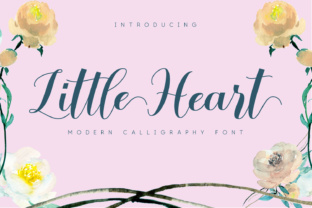
Little Heart: A Handcrafted Calligraphy Font with Big Impact
Little Heart is a unique calligraphy script font that stands out for its expressive, handcrafted style. Designed with a focus on personalization and visual appeal, it offers a warm, organic feel that can enhance a wide range of design projects. Its distinctive character makes it particularly well-suited for special events, where typography plays a key role in conveying emotion and style.
What Makes Little Heart Distinct?
Unlike many digital fonts that prioritize uniformity, Little Heart embraces variation through its extensive set of stylistic alternates. These allow designers to create typographic compositions that feel more authentic and less repetitive. Each letterform has subtle differences that mimic the natural flow of handwriting, giving the font a sense of personality and depth.
The font’s name reflects its essence—small in size but large in emotional impact. It is ideal for projects that require a touch of elegance and warmth, such as wedding invitations, greeting cards, or branding materials for boutique businesses. Its versatility extends beyond traditional print media, making it a valuable tool for digital design as well.
Comparing Little Heart to Similar Fonts
When evaluating calligraphy fonts, it’s important to consider how each option aligns with specific design goals. While many scripts offer similar aesthetics, Little Heart distinguishes itself through its attention to detail and flexibility. For instance, some fonts may provide a consistent look across all characters, which can be beneficial for maintaining visual harmony in large blocks of text. However, this consistency can also lead to a more mechanical appearance.
In contrast, Little Heart’s stylistic alternates allow for greater creative freedom. Designers can mix and match different versions of letters to achieve a more dynamic, handcrafted effect. This makes it especially useful for projects that benefit from a personalized touch, such as custom logos or artistic headlines.
It’s worth noting that not all fonts are equally suited for every use case. Some calligraphy styles may be better for long-form text due to their readability, while others are more effective as decorative elements. Little Heart falls into the latter category, excelling in short, impactful phrases rather than extended paragraphs.
Strengths and Best-Fit Situations
One of Little Heart’s greatest strengths is its ability to add a human element to design work. In an era where digital tools often produce highly polished, uniform results, this font offers a refreshing alternative. It can help convey a sense of authenticity, making it ideal for brands or events that emphasize craftsmanship, creativity, or individuality.
For example, a small business owner looking to create a unique logo might find Little Heart appealing. Its organic style can evoke a sense of warmth and approachability, which can be especially valuable in industries like hospitality, arts, or lifestyle branding. Similarly, event planners may use it to craft invitations that stand out from standard templates, adding a personal flair to weddings, birthdays, or corporate functions.
Another advantage is the font’s adaptability. It works well in both monochrome and color designs, allowing for a wide range of visual applications. Whether used as a headline in a print ad or as part of a digital banner, Little Heart maintains its visual appeal without overwhelming the surrounding elements.
Tradeoffs and Limitations
While Little Heart has many benefits, it may not be the best choice for every project. Its stylistic alternates, while useful for customization, can sometimes complicate the design process. Users who are unfamiliar with font features may need time to explore and understand how to apply these variations effectively.
Additionally, because of its handcrafted nature, Little Heart may not be as legible in smaller sizes or at a distance. This limitation means it’s best suited for larger text elements, such as titles, headings, or focal points in a composition. For body text or information-heavy content, a more structured font might be more appropriate.
Designers should also consider the context in which the font will be used. While its organic style is perfect for creative or emotional messaging, it may not align with more formal or professional settings. In such cases, a more traditional script or sans-serif font could be a better fit.
When to Choose Little Heart
Little Heart is most effective when the goal is to create a visually engaging, emotionally resonant design. It works well for projects that aim to communicate warmth, creativity, or individuality. For instance, a nonprofit organization focused on community development might use it to design promotional materials that reflect its mission of connection and care.
It’s also a strong option for personal or artisanal projects. A handmade card maker, for example, could incorporate Little Heart into their designs to reinforce the handmade quality of their products. Similarly, a wedding planner might use it to craft invitations that reflect the couple’s unique style and story.
Ultimately, the decision to use Little Heart depends on the specific needs of the project and the desired outcome. If the goal is to add a personal, expressive touch, this font can be a powerful tool. However, if clarity and consistency are more important, other options may be more suitable.
Alternatives and Considerations
There are several alternatives to Little Heart that designers might consider depending on their needs. For example, some fonts offer a more refined, elegant script that may be better suited for formal or corporate contexts. Others provide a more modern, geometric aesthetic that can complement contemporary design trends.
When choosing a font, it’s helpful to test different options in real-world scenarios. This allows designers to see how each one performs in terms of readability, visual impact, and overall compatibility with the rest of the design. By experimenting with various choices, they can make a more informed decision that aligns with their creative vision and practical requirements.
Ultimately, the right font is one that enhances the message and meets the needs of the audience. Whether it’s Little Heart or another option, the key is to select a typeface that supports the purpose of the design while adding value to the final result.